.jpg)
_male_Tricao.jpg)
.jpg)
_Figure_6_(white_background).jpg)
.jpg)



👀 What It Looks Like
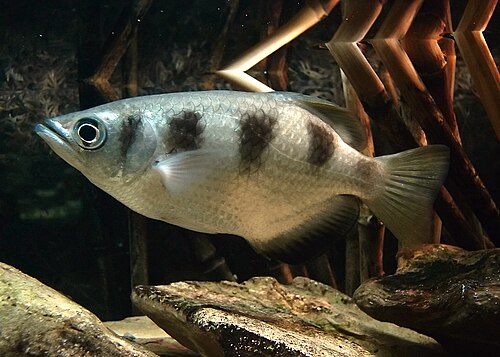
The archerfish is small but mighty, usually growing between five and ten inches long. Its body is sleek and silver, decorated with dark vertical bars or spots that help it blend in with the water around it. The most interesting part of the archerfish's face is its head, which is flat on top and almost looks like someone squished it gently. Its eyes are large and positioned up high, perfect for looking up at the world above the water. The archerfish's mouth is unusual too—it turns upward in a smile, which helps it shoot water with amazing accuracy. Its whole body is streamlined and smooth, built for speed and precision.
🏠 Where It Lives
Archerfish are found in South and Southeast Asia and northern Australia, in places where freshwater and saltwater mix together. They love mangroves with their tangled roots, quiet estuaries where rivers meet the ocean, and calm rivers where branches hang low over the water. These fish are surface swimmers, spending most of their time near the top of the water where they can see insects hanging from trees and branches above. They prefer warm, shallow water where they can hunt effectively and stay safe from bigger predators.
🍽️ What It Eats
The archerfish has a varied diet and knows how to catch its food in different ways. Its famous hunting method is shooting insects that sit on branches above the water—think of dragonflies, beetles, and spiders as favorite targets. But archerfish aren't picky eaters. They also gobble up insects that fall on the water's surface and small fish that swim nearby. Some archerfish even eat plant material when insects are hard to find. Young archerfish learn that not every leaf floating by is food, and they get better at hunting as they grow up.
🌱 How It Grows
A baby archerfish starts life when its mother lays thousands of eggs that float in the water. In just about twelve hours, tiny baby fish hatch and are on their own from the very beginning—their parents don't stick around to help. These young fish are born with an instinct to hunt, and they start practicing their water-shooting skills almost immediately. However, they're not very accurate at first! It takes weeks and weeks of practice before a young archerfish can shoot with the same deadly accuracy as the adults. By the time an archerfish is an adult, it's perfected its shooting technique through thousands of practice shots. These fish can live five to ten years in the wild.
🛡️ How It Stays Safe
Living as a small fish in waters with bigger predators can be dangerous, so archerfish have clever ways to stay safe. They swim in schools, which means many fish stick together. When one fish spots a predator like a larger fish or a hungry bird diving from above, the whole group can escape together. The archerfish's silver coloring also helps it blend in with the sunlit water, making it harder for predators to spot. These fish are super fast swimmers and can even leap out of the water completely if they need to escape danger in a hurry.
📅 A Day in the Life
An archerfish wakes up as the sun comes up and swims to its favorite hunting spots near the surface. It hangs out where branches and plants hang over the water, waiting patiently and watching carefully. When it spots an insect on a branch, it doesn't rush. The archerfish takes its time, positioning itself just right, and then—splash! It shoots its water jet. Sometimes the insect falls into the water immediately, and the archerfish gulps it down. Other times the shot misses, and the fish learns something about its aim. The archerfish keeps hunting throughout the day whenever the light is right. It rests in deeper, safer water when it gets tired, and it watches other archerfish hunt, learning new tricks and better techniques by paying attention.
👶 How It Makes More of Itself
When a female archerfish is ready to have babies, she can lay between twenty thousand and one hundred fifty thousand eggs! That's a huge number. She doesn't pick a special place to lay them—the eggs just float in the water. Because there are so many eggs, some will survive even though their parents don't take care of them and many get eaten by other fish. The eggs hatch in about twelve hours into tiny transparent babies. Only a small fraction of these babies will grow into adult archerfish, but that's how nature works. Those that survive will grow strong and learn to hunt on their own.
⭐ Cool Facts
- The archerfish can adjust its aim to account for light refraction, which means it understands that light bends when it passes from air into water. This is a skill that even some scientists have a hard time understanding!
- A young archerfish practices its shooting by observing adult archerfish and copying their techniques, showing that these fish can actually learn by watching each other hunt.
- Some archerfish have been observed to remember and target the same insects repeatedly, suggesting they might have pretty good memories for finding food sources.
📋 Conservation Status
The good news is that archerfish are not in danger of disappearing anytime soon. There are healthy populations living in their natural habitats across South and Southeast Asia and Australia. They can adapt to different water conditions, which helps them survive in changing environments. However, like many creatures that live in wetlands and mangroves, they do face challenges from pollution and habitat loss as humans build more cities and farms. Scientists continue to watch these amazing fish to make sure they stay healthy and thriving in their homes.